Fuel the Fire: Why Nutrition Is a Game-Changer for Athletes
 Henry Goldsmith
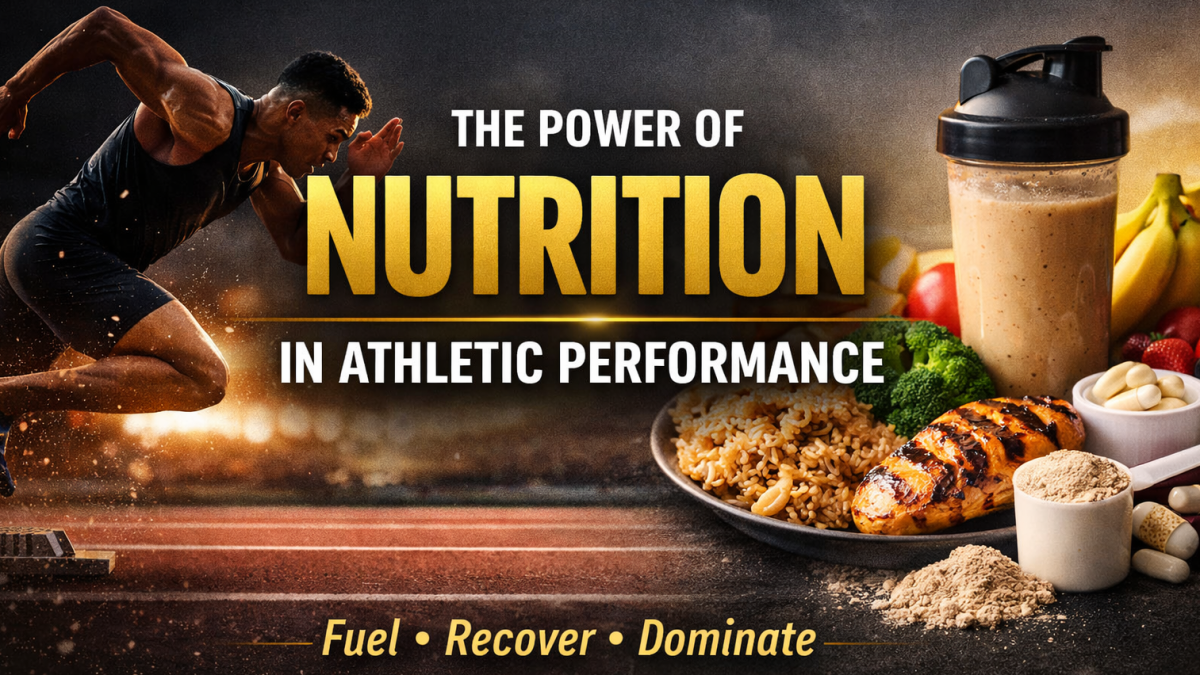
Speed is trained. Performance is fueled. Learn why nutrition is a game-changer for track and field athletes this season.

When the gun goes off, nobody is thinking about what they ate.
But make no mistake, your body is.
Speed isn’t just trained.
Endurance isn’t just built.
Power isn’t just practiced.
It’s fueled.
If training is the spark, nutrition is the gasoline. And too many athletes are trying to win races with an empty tank.
Let’s fix that.
1. Food Is Energy - Not Just Calories
Your body doesn’t see “breakfast,” “lunch,” or “snacks.”
It sees fuel.
Carbohydrates become glycogen, the stored energy your muscles rely on for sprinting.
Protein becomes repair material, rebuilding muscle fibers after hard sessions.
Fats support hormone production and long-term energy.
Vitamins and minerals keep your systems firing the way they’re supposed to.

If you underfuel, you don’t just “feel tired.”
You reduce power output.
You slow reaction time.
You increase injury risk.
You delay recovery.
That 0.2 seconds you’re chasing?
It might not be in your mechanics.
It might be in your kitchen.
2. Recovery Starts at the Table
A tough workout breaks the body down.
That’s not a bad thing - it’s how we grow.
But adaptation only happens if the body has what it needs to rebuild. Without proper nutrition, your muscles stay in a damaged state longer. Recovery slows. Soreness lingers. Progress stalls.
Post-workout fuel isn’t optional; it’s strategic.
69a4f8a9a8b1c_lg.png)
A quality smoothie with protein and carbohydrates, for example, can accelerate muscle repair and restore glycogen quickly. Something like a banana, protein powder, and healthy fats (like almond butter or flax seeds) becomes more than a snack - it becomes a performance tool.
Food is either speeding up your comeback… or delaying it.
G-Force Recovery Smoothie
Best Time: Within 30–60 minutes post-workout
Purpose: Replenish glycogen + jumpstart muscle repair
Ingredients
-
1 frozen banana
-
½ cup strawberries
-
½ cup blueberries
-
½ cup pineapple
-
½ cup mango
-
1 tbsp peanut butter (optional)
-
1 scoop whey or plant protein
-
1–1½ cups almond, cashew, or oat milk
Optional Add-Ons
-
1 tbsp chia or flax seeds
-
Pinch of sea salt
-
Handful of kale (you won’t taste it)
Blend. Refuel. Recover.
Additional Smoothie Recipes: Pre-Meet | Recovery | Mass Builder
3. Hydration = Performance Insurance
Even mild dehydration affects:

-
Sprint speed
-
Focus
-
Coordination
-
Power output
If your urine is dark yellow, your performance is probably already slipping.
Water isn’t boring.
It’s elite.
And in-season athletes don’t wait until practice to hydrate. They show up hydrated.
4. More Isn’t Always Better (Especially with Supplements)
Let’s be honest, supplements are everywhere. Energy drinks. Pre-workouts. Stacks. “Performance boosters.”
But here’s what most athletes don’t realize:
Combining supplements isn’t simple math.
Sometimes:
-
1 + 1 = 0 (they cancel each other out)
-
1 + 1 = 3 (they amplify effects)
-
1 + 1 = 10 (they overstimulate or cause issues)
For example, certain minerals can block the absorption of others, while others enhance absorption depending on timing and pairing.
Translation?
More products doesn’t mean more performance.
Most athletes can get what they need from quality food first. Supplements are just that: supplemental.
The foundation is always nutrition.
5. Nutrition Is a Competitive Advantage
Here’s the truth most athletes overlook:
At the high school level, especially, the gap isn’t always talent.
It’s habits.
The athlete who:
-
Eats consistently
-
Refuels after training
-
Stays hydrated
-
Prioritizes recovery
-
Avoids under-eating
… often outperforms the athlete who relies on talent alone.
Because over time, small habits compound.
And championships are built in the quiet decisions nobody sees.
The Bottom Line
You train hard.
You show up early.
You push through reps.
Don’t let poor fueling cancel out elite effort.
69a4f882c831d_lg.png)
Nutrition isn’t about being perfect.
It’s about being intentional.
In this series, we’ll break down:
-
What to eat before competition
-
How to fuel for speed vs endurance
-
Post-workout recovery strategies
-
Simple meal planning for athletes
-
Hydration strategies for in-season performance
Because running fast is a skill.
But sustaining greatness?
That’s fueled.
Categories: : Blog, Nutrition, Sports Performance